|
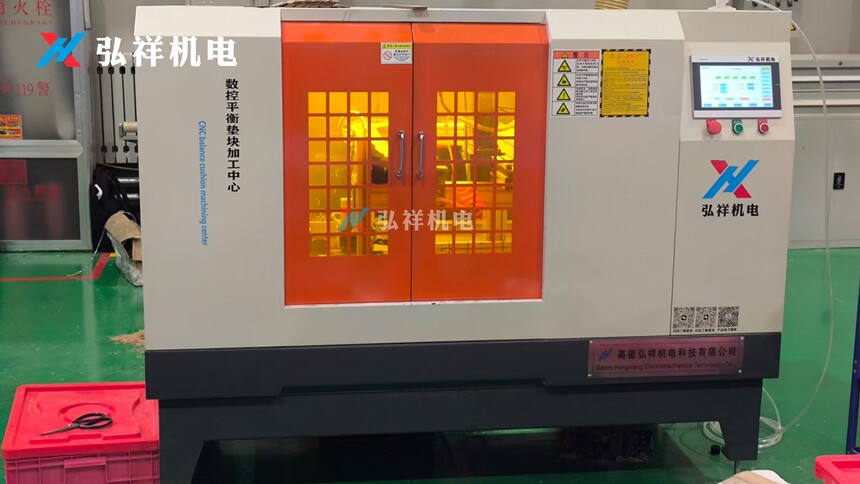
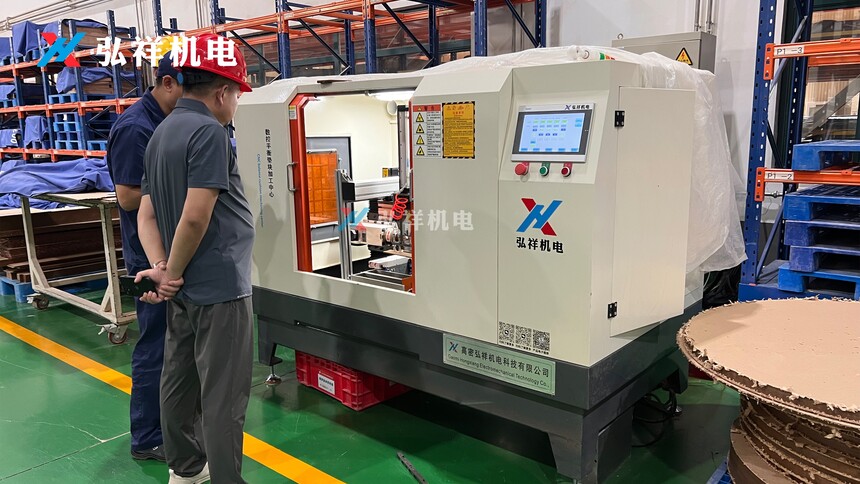
The Intelligent Leap in Precision Insulation Component Manufacturing In the core areas of modern power equipment and high-end transportation devices, pressed-structure insulating balancing blocks play an indispensable role as precision components. These seemingly small insulating spacers, with their uniformity in thickness, surface finish, and precision in edge treatment, directly determine the long-term operational reliability and safety of high-voltage insulation systems. Traditional methods relying on skilled manual or semi-automatic processing can no longer meet the increasingly stringent industrial demands, particularly in terms of efficiency, precision, and consistency, where significant bottlenecks exist. The advent of the fully automatic balancing block machine marks a revolutionary breakthrough in this specialized manufacturing field. Through its systematic design integrating "automation, high precision, and flexibility" as a trinity, it provides an unprecedented solution for the precision machining of insulating blocks.
The trinity core design philosophy forms the technical foundation of this equipment. First, in terms of automation, the device achieves a complete closed-loop process from automatic feeding of blanks, precise positioning, multi-process composite machining, to finished product offloading. Its intelligent sensing system and program control system work in coordination to ensure the entire process proceeds without manual intervention, significantly reducing labor intensity and the risk of human error while elevating production cycles to new heights. Second, high precision is the soul of the equipment's performance. Through the adoption of high-rigidity structural design, precision linear drive systems, and full closed-loop feedback control, the equipment can stably achieve micron-level (typically up to ±0.01mm) machining tolerances and exceptional surface quality, perfectly meeting the stringent dimensional accuracy requirements of high-voltage insulation components. Particularly crucial is its flexibility, which enables the equipment to transition from "specialized" to "universal." Through rapid switching of parametric programming systems and modular fixtures, it can adapt to the machining of blocks with different dimensions, thicknesses, and process requirements in an extremely short time, providing ideal flexible production capabilities for modern production models characterized by small batches and multiple varieties.
The practical path of technological integration is reflected in the system architecture that combines "CNC programming, pneumatic feeding, and automated machining" into one. CNC programming not only provides an intuitive human-machine interface but also embeds an intelligent process library tailored to the characteristics of insulating materials (such as epoxy boards and composite paper boards), achieving optimal matching of machining parameters. The pneumatic feeding system, with its fast, stable, and clean characteristics, ensures the continuity and positioning accuracy of blank supply. The core automated machining unit, through a modular structure, ingeniously integrates the two critical processes of milling and chamfering into a single workstation. The high-precision spindle first performs surface milling, then seamlessly transitions via automatic tool changing or a composite power head to carry out highly consistent chamfering. This process integration completely eliminates the efficiency losses and cumulative errors associated with traditional multi-machine setups and repeated clamping, achieving high-quality completion in a single clamping.
The industrial value of this equipment is profound and multidimensional. In terms of efficiency, it has elevated the processing efficiency of insulating blocks by orders of magnitude, significantly shortening product delivery cycles. In terms of quality, through the standardization and automation of the process, it shifts product quality from reliance on "artisan craftsmanship" to dependence on a "stable system," ensuring a high degree of consistency between batches and providing a solid guarantee for the safety of downstream primary equipment. In terms of cost, by reducing dependence on highly skilled technicians, minimizing material waste, and lowering scrap rates, it optimizes the overall manufacturing cost structure. More importantly, it represents a future-oriented intelligent manufacturing paradigm—encapsulating specialized process knowledge into automated equipment, making the production of complex precision parts efficient, simple, and reliable. It provides robust technological support for enterprises to respond to rapidly changing market demands and the challenges of industrial upgrading. |