|
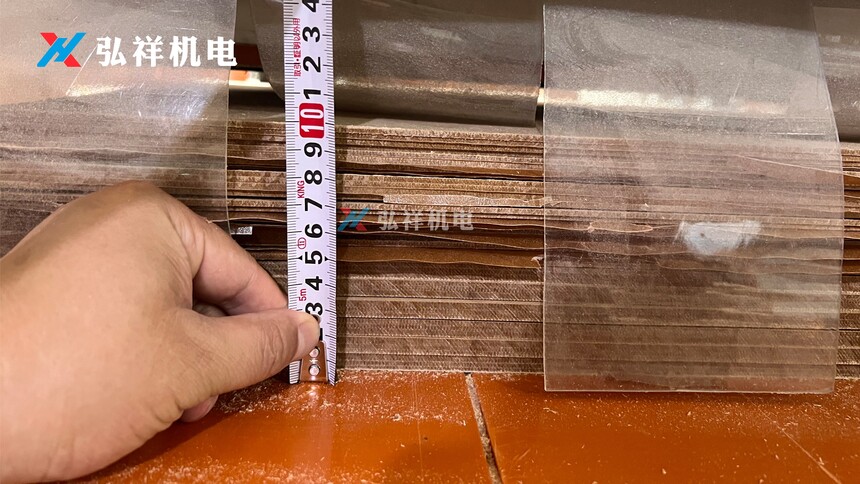
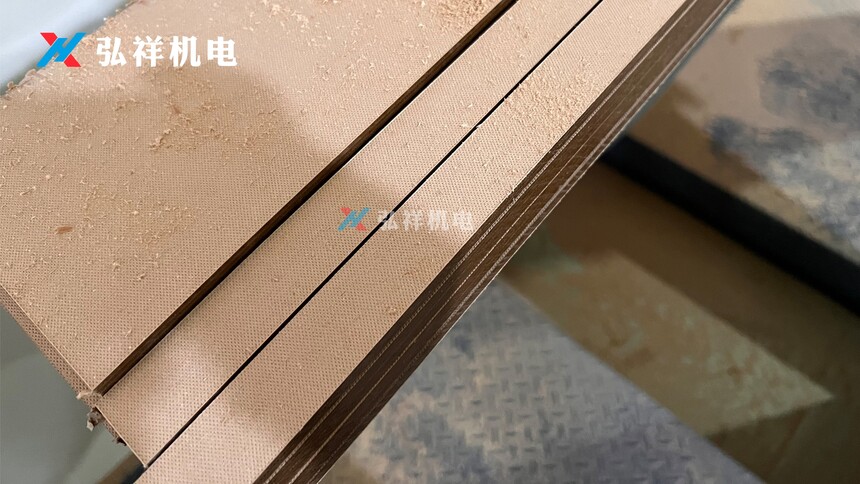
How Electronic Panel Saws Are Reshaping Modern Transformer ManufacturingIn the grand symphony of the power industry, transformers act as the silent yet steadfast heart, safely and stably delivering electrical energy to millions of households. Within this "heart," there is a component often overlooked but of critical importance—the precisely cut insulating wooden components. Today, with the widespread application of electronic panel saws, this traditional craft is undergoing a profound technological revolution, injecting unprecedented precision and efficiency into the transformer manufacturing industry. From Tradition to Modernity: A Silent Technological Revolution In transformer manufacturing, wood—particularly specially treated laminated wood and insulating pressboard—has always been an indispensable insulating material. These wooden components play multiple roles within a transformer: acting as insulating barriers between windings to prevent short circuits; providing structural support to maintain overall stability; and serving as channels for heat dissipation to ensure normal equipment operation. Traditional manual or semi-mechanical cutting methods were akin to an experienced carpenter relying on skill and intuition to complete the work, yet they inherently suffered from limitations in precision and consistency. The emergence of the electronic panel saw has changed all of this. It perfectly integrates digital control technology with precision machinery, elevating cutting accuracy from the millimeter level to the level of tenths or even hundredths of a millimeter. At a large transformer manufacturing enterprise in Chongqing, Technical Director Mr. Wang demonstrated this change: "In the past, experienced craftsmen manually cut laminated wood braces. They could produce, at most, several dozen per day, and there were always subtle size variations. Now, our electronic panel saw can cut over a thousand braces in an eight-hour shift, with dimensional errors not exceeding 0.1 mm for each, fully meeting the technical requirements for 500 kV ultra-high voltage transformers."
The Precision Revolution: Protecting Millions of Homes with Micron-Level Accuracy In a high-voltage electric field, any minute dimensional deviation can become a weak point in the insulation system. Through multiple technological innovations, electronic panel saws have achieved a revolutionary improvement in cutting precision. A high-rigidity machine tool structure is the physical foundation of precision. Beds designed using finite element analysis optimization, paired with precision linear guides and ball screws, maintain excellent geometric stability even under long-term continuous operation. Maintenance records from a factory in Jiangsu specializing in special transformers show that an electronic panel saw introduced five years ago still maintains its original factory precision standards, with a cumulative cutting length exceeding 50 kilometers. Intelligent sensing and closed-loop control systems are the brain and nerves of precision. Modern high-end electronic panel saws are commonly equipped with high-resolution optical scales or magnetic scales, which monitor the sawing position in real-time and enable dynamic compensation through a closed-loop control system. The latest model from a renowned German brand has even introduced a laser interferometer for online calibration, theoretically achieving a positioning accuracy of 0.001 mm. "What benefits us the most is the equipment's thermal deformation compensation function," explained Production Manager Ms. Li from a Shanghai-based transformer component supplier. "Our workshop does not have constant temperature conditions; the temperature difference between summer and winter can exceed 20 degrees Celsius. Precision fluctuations caused by this in traditional equipment used to be a major headache. Our current electronic panel saw has built-in temperature sensors and compensation algorithms, completely eliminating this effect." The optimization of specialized cutting tools and processes is equally crucial. For difficult-to-machine materials commonly used in transformer manufacturing, such as phenolic resin laminated boards and epoxy glass cloth boards, equipment manufacturers have developed special-coated carbide saw blades. When paired with precisely controlled cutting parameters, these ensure the cut surface is as smooth as a mirror—free of burrs, edge chipping, or burns—perfectly preserving the material's insulating properties. The Efficiency Leap: An Accelerator for the Era of Smart Manufacturing If precision is the foundation of the electronic panel saw, then efficiency is its core competitive advantage. Against the backdrop of modern manufacturing's pursuit of lean production, electronic panel saws have achieved exponential growth in efficiency through various means. Automated integration combines multiple processes into one. Automatic feeding systems precisely deliver sheet materials into the work area, vision positioning systems identify material location and characteristics, and robotic arms or vacuum suction cups perform automatic sorting and stacking of cut parts. At an intelligent transformation demonstration enterprise in Zhejiang, the entire process—from raw sheet material to finished components—proceeds without manual intervention, increasing production efficiency by over five times compared to traditional methods. Intelligent nesting optimization software reduces waste at the source. Using advanced algorithms, the system can arrange parts to be cut on a full sheet in the most optimal way, maximizing material utilization like playing a game of Tetris. Research from the Shenyang Transformer Research Institute indicates that after adopting intelligent nesting, the average utilization rate of laminated board increased from around 75% with traditional manual nesting to over 92%. This alone reduces material costs by nearly 20%. Rapid changeover capability adapts to the trend of customized production. The modern transformer market increasingly leans towards multi-variety, small-batch production, making the ability to quickly switch production tasks paramount. High-end electronic panel saws employ modular design and intelligent memory functions; changing product programs typically takes only a few minutes. "Last week, we consecutively produced transformer blocks of three different specifications. The largest was ten times the size of the smallest," proudly stated the owner of a private transformer enterprise in Hebei. "But our equipment handled the switches effortlessly. This was something we dared not even think of before." Safety and Environmental Protection: The Invisible Yet Significant Dual Dividend The benefits brought by electronic panel saws extend beyond direct production gains; their contributions to safety and environmental protection are equally noteworthy. Safety improvements manifest at multiple levels. Enclosed designs paired with high-efficiency dust removal systems keep dust concentrations generated during cutting within occupational health standards, protecting workers' respiratory health. Fully automated operation reduces direct contact between personnel and sharp cutting tools, fundamentally avoiding cutting injury accidents. Real-time monitoring and early warning functions for equipment operating status enable timely detection of potential faults, preventing unexpected downtime or equipment damage. Environmental benefits are also significant. Higher material utilization means reduced resource consumption and waste generation. A medium-sized transformer factory calculated that after switching to electronic panel saws, they reduced laminated wood waste by over 15 tons annually, equivalent to sparing the felling of about 30 mature trees. Optimized cutting processes also lower energy consumption, with power usage for the same output reduced by approximately 30% compared to traditional equipment. A Key Node in the Smart Manufacturing Ecosystem Amid the wave of Industry 4.0 and smart manufacturing, the electronic panel saw is no longer an isolated production device but an important node within the entire digital manufacturing network. Through seamless integration with MES (Manufacturing Execution Systems), electronic panel saws can directly receive production orders and 3D model data, automatically generating machining programs. All parameters, output, and quality data from the machining process are collected in real-time and uploaded to the cloud, providing a complete data chain for production process traceability and quality analysis. In a digital transformer workshop in Guangdong, an electronic panel saw has even developed preliminary adaptive capabilities. "Our equipment automatically fine-tunes cutting parameters based on real-time monitoring data of tool wear, ensuring consistent cut quality," explained Workshop Director Mr. Chen. "It also sends tool life data to the management system, providing early warnings for replacement times to avoid unplanned downtime." Continuous Evolution Towards the Future As new materials and processes continually emerge, electronic panel saw technology itself is also undergoing continuous evolution. To meet the demand for special transformers in the new energy sector, equipment manufacturers are developing specialized models capable of cutting new insulating materials such as carbon fiber-reinforced composites. The introduction of artificial intelligence technology enables equipment to continuously optimize cutting parameters through machine learning, adapting to minor variations between different material batches. Hybrid processing equipment combining additive manufacturing with traditional subtractive methods is also beginning to show promise in prototyping and small-batch production. "Five years ago, when we introduced our first electronic panel saw, we were primarily drawn to its precision advantage," summarized an industry veteran. "But now, we place greater value on its connectivity as a smart production node and the value of its data. It is evolving from a 'capable' device into a 'thinking' production partner." Conclusion: Precision Cutting, Forging the Foundation of Power From hand saws to electronic panel saws, the wood cutting process in transformer manufacturing has undergone a long evolutionary journey. This transformation, seemingly subtle, profoundly impacts the manufacturing level and competitive landscape of the entire industry. Behind every smoothly operating transformer, there are countless insulating components precisely processed by electronic panel saws, silently safeguarding the smooth flow and safety of electrical current. Only through exquisitely fine craftsmanship can one navigate the high-voltage world with ease; only through intelligent cutting can one stand at the forefront of transformative waves. The electronic panel saw is not merely a piece of equipment; it is a philosophy—a reminder in today's era where manufacturing returns to its essence and pursues perfection: true excellence often begins with the most fundamental processes and is achieved through the most meticulous crafting. |